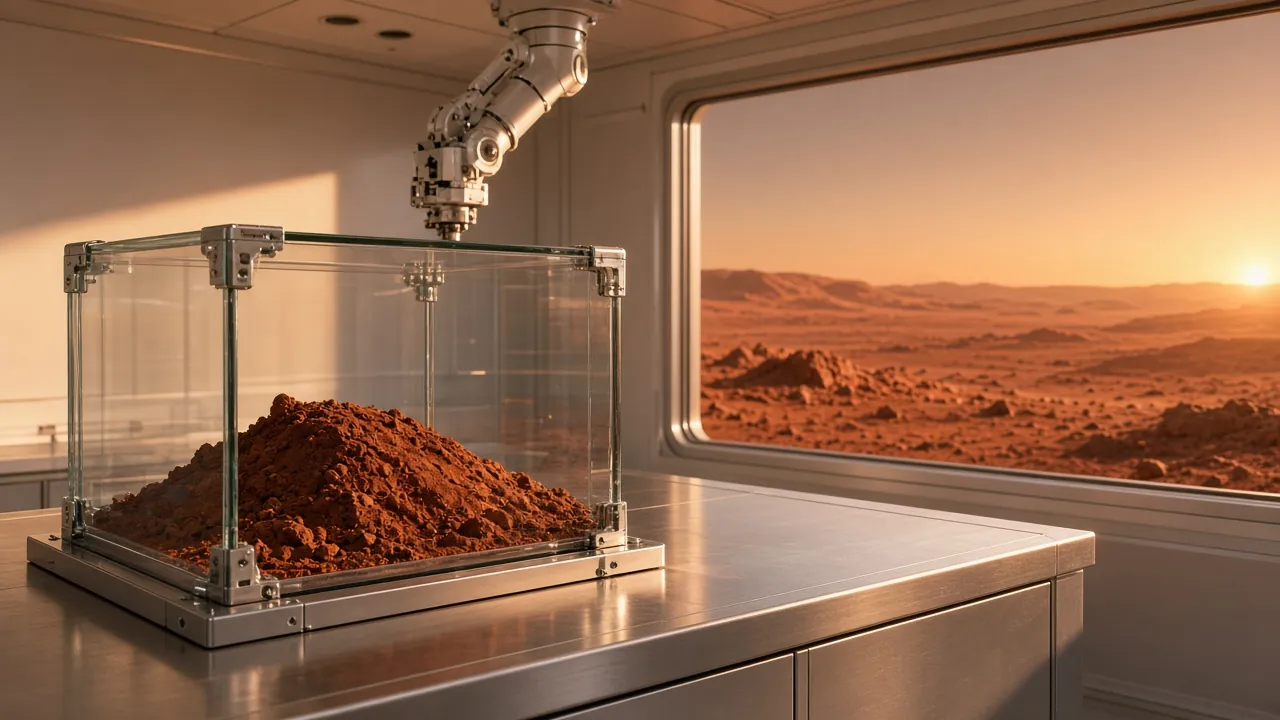
Imagine, for a moment, an intrepid rover diligently scraping away at the Martian soil, when suddenly, its instruments detect something extraordinary: undeniable evidence of microbial life! The world erupts in celebration, a monumental achievement for humanity. But pause. What if that magnificent discovery wasn't truly Martian? What if those tiny, captivating organisms were, in fact, stowaways from Earth, inadvertently carried across the vast cosmic ocean by the very technology we sent to find life elsewhere?
This isn't a science fiction plot twist; it's a real and profound concern for NASA and the global space community. It's the core of a fascinating, often overlooked, but absolutely critical field known as planetary protection. And in our relentless pursuit of understanding whether life exists beyond Earth, particularly on our tantalizing neighbour Mars, planetary protection isn't just a guideline – it's the invisible shield that safeguards the very integrity of our most profound discoveries.
Disclosure: How we researched this: we compiled this guide from the public sources named in the text, and did not test the products ourselves. Our editorial policy explains how we choose and check sources.
The Two Sides of the Cosmic Coin: Forward and Backward Contamination
Planetary protection, at its heart, is a dual mandate: to prevent biological contamination of other celestial bodies by Earth organisms (known as forward contamination) and to prevent the biological contamination of Earth and its biosphere by extraterrestrial life forms (backward contamination). While the latter might conjure images of Hollywood alien invasions, in reality, it's about safeguarding our precious planet from any potentially harmful or disruptive non-native microbes, should they exist and be brought back.
For Mars, the focus is heavily on forward contamination. Why is this so crucial? Because Mars, with its intriguing geological history, evidence of past water, and tantalizing subsurface ice, represents our best current chance of discovering extant (still living) or extinct alien microbial life within our solar system. If we unintentionally introduce Earth microbes, they could:
- Falsely indicate the presence of Martian life: Imagine the scientific and existential confusion if we couldn't differentiate between a native Martian microbe and one that hitched a ride from Earth.
- Outcompete or destroy native Martian life: Earth's microbes are incredibly robust. If Martian life is rare or delicate, an influx of our own could easily overwhelm it, destroying the very thing we seek to study. This would be an irreparable loss of scientific opportunity and a profound ethical failure.
- Alter the Martian environment: While less likely in the grand scheme, a widespread introduction of Earth microbes could hypothetically alter the delicate Martian ecosystem in ways we don't yet understand.
The stakes, as you can see, couldn't be higher. It's not just about finding life; it's about finding Martian life, uncontaminated and undisturbed.
The Rigorous Gauntlet: How NASA Sterilizes for Mars Missions
So, how does NASA ensure its advanced robotic explorers don't become biological Trojan horses? The process is a proof of meticulous engineering, modern science, and unwavering dedication. It starts long before a spacecraft ever leaves the assembly cleanroom.
1. Categorization by Destination and Mission Type
Not all celestial bodies are created equal in the eyes of planetary protection. Destinations are categorized based on their potential to harbor life. Mars, particularly areas with subsurface water ice or potential brines, falls into a high-priority category that demands stringent sterilization protocols. Missions are also classified; a flyby has different requirements than a lander or a rover designed to directly sample the Martian subsurface.
2. The Cleanroom: More Than Just a "Clean" Room
When you see images of engineers in "bunny suits" assembling spacecraft, they're not just for show. These are highly controlled cleanrooms, often ISO Class 8 (or better), designed to minimise airborne particles, including microscopic dust and, critically, microbes. Air is filtered multiple times, temperatures and humidity are controlled, and personnel undergo rigorous training and sterilization procedures themselves before entering.
3. The Baking: Dry Heat Sterilization
One of the most effective methods for sterilizing spacecraft components is dry heat. Imagine baking a giant circuit board or a titanium drill bit at temperatures that would make your oven blush – often 110-125°C (230-257°F) for extended periods. This extreme heat denatures proteins and destroys the cell walls of microbes, effectively rendering them inert. Many components destined for Mars undergo multiple cycles of this treatment.
However, not everything can withstand such intense heat. Delicate electronics, certain plastics, and scientific instruments might be damaged. This leads to a multi-pronged approach.
4. Chemical Washes and Vapour Hydrogen Peroxide
For heat-sensitive components, chemical sterilization comes into play. Surfaces are meticulously wiped down with sterilizing agents like isopropyl alcohol or hydrogen peroxide solutions. For complex geometries or materials that can't be baked or wiped, a technique called vapour hydrogen peroxide (VHP) sterilization is used. Components are placed in a chamber, and hydrogen peroxide gas is introduced, penetrating crevices and effectively sterilizing surfaces without extreme heat.
5. Bioburden Assays: Counting the Unseen
After all these sterilization steps, how do engineers know they've been successful? They perform bioburden assays. Swabs are taken from various surfaces of the spacecraft, and these swabs are then cultured in a laboratory. Any microbial growth indicates an incomplete sterilization. The goal is to drive the number of viable spores (the hardiest form of bacteria) down to incredibly low levels – sometimes less than 300 viable spores on the entire surface of a large spacecraft, or even fewer for components directly contacting Martian soil.
6. Encapsulation and Protection
Once components are sterilized, they are often immediately bagged or encapsulated in sterile containers to prevent re-contamination during transport and integration into the spacecraft. The entire system is then assembled under ultra-clean conditions.
7. Final Launch Site Procedures
Even at the launch pad, procedures are in place. The payload fairing – the nose cone that protects the spacecraft during launch – is often purged with filtered air to maintain cleanroom conditions right up until liftoff.
The "Special Regions" of Mars: Where the Rules Get Even Stricter
Within Mars itself, some areas are considered "Special Regions." These are places where Earth organisms could potentially replicate, or where indigenous Martian life, if it exists, could be found. Think of areas with a high potential for liquid water (even transiently), or subsurface features where ice might melt. For missions targeting these regions, such as potential future sample return missions or deep drilling capabilities, the planetary protection requirements ramp up even further, exceeding the already rigorous standards.
This kind of stringency requires groundbreaking new sterilization techniques and even more precise bioburden measurements.
Backward Contamination: The Return Journey Considerations
While current Mars missions focus heavily on forward contamination, future missions have a crucial second act: the return of Martian samples to Earth. NASA's Mars Sample Return campaign, in collaboration with the European Space Agency (ESA), is precisely designed to do this. Bringing Martian material back, however, triggers the backward contamination protocols.
The meticulous planning here ensures that any samples returned are treated with the utmost caution. Containment is paramount. The sample tubes themselves will be sealed on Mars, then placed into a second, larger containment vessel, and then into a third. These will be further sealed inside a Sample Return Orbiter that will bring them back to Earth. Upon arrival, the samples will be quarantined in a specially designed, ultra-secure facility – a Martian equivalent of a Biosafety Level 4 lab, only many times more stringent.
Scientists will develop protocols to open these containers and analyse the samples in a way that absolutely prevents any escape of potential Martian material into Earth's biosphere. This could involve highly sophisticated robotic manipulation within completely sealed environments, and extensive testing of the samples for any signs of biological activity before they are ever exposed to Earth's atmosphere.
It's an engineering and scientific challenge perhaps even greater than landing on Mars itself, all driven by the imperative of planetary protection.
Why This Matters: Ethics, Science, and Our Future in Space?
Planetary protection isn't just a bureaucratic hurdle; it's a cornerstone of responsible space exploration. It's about:
- Ethical Stewardship: As explorers, we have a profound ethical responsibility to not irreversibly alter other worlds, especially those that might harbor life. We wouldn't want an alien civilization to contaminate our planet, and we should extend the same respect.
- Ensuring Scientific Integrity: The entire scientific endeavor of searching for extraterrestrial life hinges on the absolute certainty that any discovery is truly alien. Planetary protection safeguards this certainty.
- Protecting Earth: While the probability is low, the consequences of introducing a truly alien pathogen or disruptive microbe to Earth could be catastrophic. Backward contamination protocols are our insurance policy.
- Paving the Way for Human Exploration: If we are ever to send humans to Mars, the understanding and implementation of planetary protection will be even more critical. Humans are notoriously difficult to sterilize, and the challenges of preventing contamination (both ways) will multiply exponentially. The lessons learned from robotic missions are vital groundwork.
The journey to understand life beyond Earth is one of humanity's most profound quests. It pushes the boundaries of our technology, our understanding of the universe, and our very place within it. Planetary protection, with its silent, rigorous demands, is the unseen hero of this quest. It ensures that when we finally do gaze upon undeniable proof of Martian life, we can do so with confidence, knowing that what we have found is truly extraterrestrial, a unique spark in the cosmic darkness, untouched by our earthly hands. It’s a proof of our commitment not just to discovery, but to the responsible and respectful exploration of the cosmos, one sterile component at a time.
Sources and further reading
Official and primary sources covering the topics in this article:
- NASA Science: Mars: background on Mars exploration missions.
- NASA: ISS research: background on science done on the space station.
- NASA: planetary protection: background on avoiding contamination of other worlds.
Related Articles
Chris is a freelance writer and editor covering a wide range of topics with a focus on accuracy and depth.
Last updated: 2026-04-25 · Fact-checked by editorial team
Content Attribution: All content on Space Exploration & NASA News Shorts is original. External sources are attributed where applicable. Trademarks belong to their respective owners.