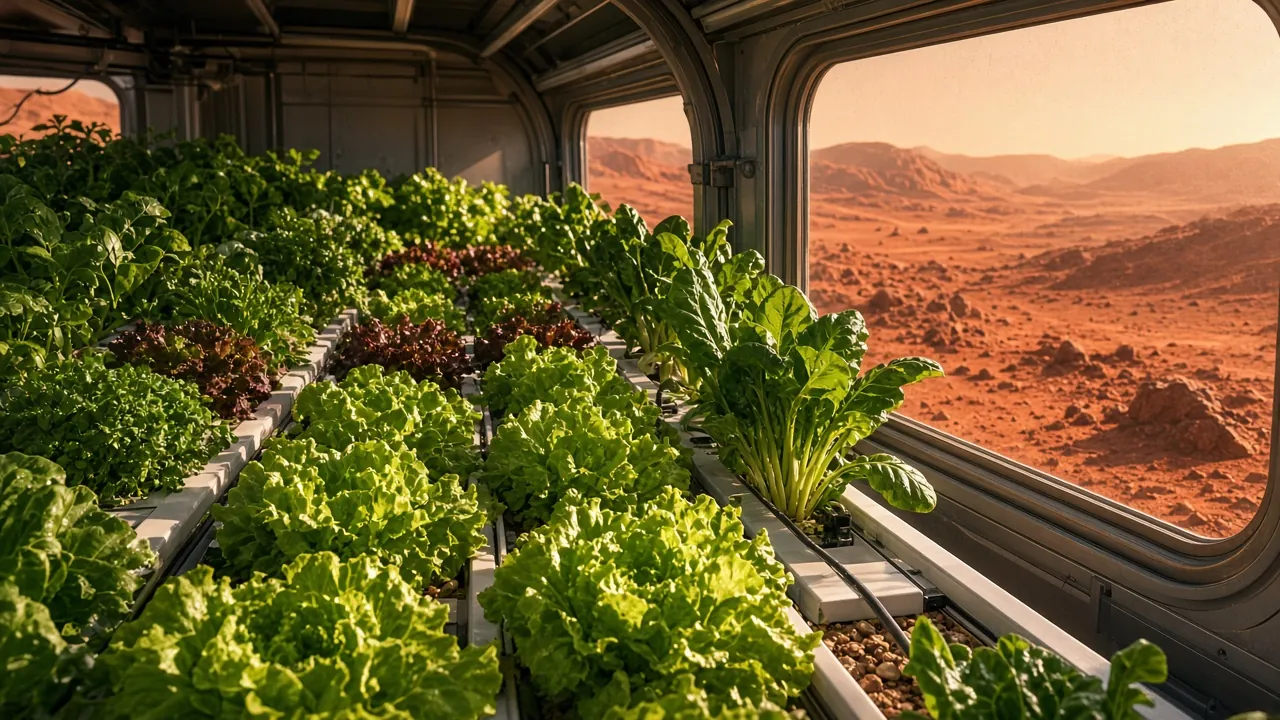
Imagine biting into a crisp, fresh lettuce leaf grown not in the rich soil of Earth, but under the alien glow of Martian sunlight, or perhaps within the sterile confines of a lunar habitat. This isn't science fiction anymore; it’s the burgeoning field of astro-gardening, a crucial discipline that promises to feed future generations of spacefarers and might even offer innovative solutions for sustainable agriculture back home. As humanity sets its sights on longer missions to the Moon, Mars, and beyond, the question of what to eat becomes paramount. Hauling every calorie from Earth is simply not sustainable. Enter the audacious ambition of growing our own food in the cosmos.
For decades, astronauts have subsisted on carefully packaged, shelf-stable meals – think freeze-dried rations, thermostabilized pouches, and rehydratable drinks. While these have kept crews alive and well, the psychological and nutritional benefits of fresh food are undeniable. The scent of living plants, the tactile experience of harvesting a ripe tomato, and the vibrant flavours of freshly picked produce can do wonders for morale during extended periods away from Earth. Beyond comfort, fresh fruits and vegetables offer vital micronutrients that degrade over time in preserved foods, ensuring optimal health for astronauts facing the stresses of microgravity and radiation.
Disclosure: How we researched this: we compiled this guide from the public sources named in the text, and did not test the products ourselves. Our editorial policy explains how we choose and check sources.
The Green Thumb in Space: Early Experiments and Breakthroughs
The journey to astro-gardening began modest. Early experiments on the International Space Station (ISS) were less about feeding the crew and more about understanding how plants react to a microgravity environment. Would roots grow upwards? Would water behave differently? Researchers carefully monitored various crops, from small flowering plants to more practical leafy greens. The Veggie system, formally known as the Vegetable Production System, marked a significant leap forward. Launched to the ISS in 2014, Veggie allowed astronauts to grow and consume 'Outredgeous' red romaine lettuce. This was a monumental moment – the first time a crop grown entirely from seed to harvest in space was eaten by humans. Imagine the excitement of Scott Kelly and his crewmates tasting that fresh lettuce!
Building on Veggie's success, NASA introduced the Advanced Plant Habitat (APH). APH is a more sophisticated growth chamber, providing even greater control over environmental factors like light intensity, temperature, humidity, and atmospheric composition. It's essentially a high-tech miniature greenhouse, allowing scientists to conduct more complex studies on plant growth, nutrient uptake, and even genetics in space. These experiments aren't just about growing food; they're about tweaking the recipes for success in extraterrestrial environments.
The Martian Menu: Challenges and Innovations on the Red Planet
Moving from the controlled environment of the ISS to the harsh realities of Mars presents a whole new set of challenges. Mars's thin atmosphere, low temperatures, and intense radiation levels are not exactly conducive to a thriving garden. However, scientists are relentlessly innovative.
One of the biggest hurdles is soil. Martian regolith, the loose material covering the planet's surface, lacks the organic matter and beneficial microbes found in Earth's soil. It also contains perchlorates, salt-like compounds that are toxic to humans and plants in high concentrations. Yet, recent studies have shown promising results with simulated Martian soil, particularly when supplemented with nutrients and, crucially, protected from the planet's harsh conditions. Enclosed, pressurized greenhouses, often underground or shielded by regolith, would be essential to maintain Earth-like temperatures and atmospheric pressure.
Water is another precious resource. Mars has ice, particularly at its poles and beneath the surface, but extracting and purifying it for plant use requires significant energy and infrastructure. Closed-loop hydroponic and aeroponic systems are leading candidates. Hydroponics involves growing plants in nutrient-rich water solutions without soil, while aeroponics mists the roots with nutrient-rich water. Both methods are incredibly water-efficient, recycling almost all the water used, making them ideal for arid environments like Mars or the Moon.
Light is also a critical factor. While Mars receives sunlight, it's less intense than on Earth, and the Red Planet's dust storms can block it for extended periods. This is where LED lighting comes in. NASA and other space agencies are developing specialised LED systems that can provide the exact spectrum of light plants need for optimal photosynthesis, independent of external conditions. This allows for controlled growth, maximising yield in a minimal footprint.
Beyond Leafy Greens: Expanding the Space Crop Portfolio
While lettuce is a great start, a balanced diet requires more. Researchers are actively investigating a wider variety of crops suitable for space growth. Potatoes, with their high caloric content and adaptability, are strong contenders, as immortalized in 'The Martian.' Sweet potatoes, peas, tomatoes, strawberries, and even some grains are also being studied for their nutritional value, growth efficiency, and the ability to thrive in controlled environments. The ultimate goal is a diverse menu that provides all the necessary vitamins, minerals, and calories for long-duration missions.
Imagine a future Martian colony where astronauts could harvest their own potatoes for dinner, alongside a fresh salad, and perhaps even some strawberries for dessert. This isn't just about survival; it's about making space feel more like home.
The Lunar Laboratory: Growing on the Moon
The Moon, Earth's closest celestial neighbour, offers a different set of challenges and opportunities. Like Mars, lunar soil (regolith) is largely devoid of organic matter. However, the Moon's proximity to Earth makes it an ideal testing ground for future Martian agriculture. Early experiments, like China's Chang'e 4 mission, successfully sprouted cotton seeds on the lunar far side, demonstrating that life can indeed germinate in a lunar environment.
NASA's Artemis program envisions a sustained human presence on the Moon, which will undoubtedly involve significant advancements in lunar gardening. The European Space Agency (ESA) is also researching lunar plant growth, exploring ideas for inflatable greenhouses that could be deployed on the lunar surface, protected by regolith berms. The Moon could become a vital 'farm-to-table' outpost, supplying fresh produce to lunar bases and even serving as a proving ground for techniques destined for Mars.
Astro-Gardening's Earthly Impact: From Space to Sustainability
The innovations driven by astro-gardening research have profound implications for agriculture here on Earth. Solving the puzzle of growing food in harsh, resource-limited environments directly translates to solutions for global food security.:
- Vertical Farms: The stacked, controlled-environment growth systems developed for space are already influencing the rise of vertical farms in urban areas. These multi-layered farms maximise yield in minimal space, use significantly less water than traditional agriculture, and can be located close to consumers, reducing transportation costs and emissions.
- Water Conservation: Hydroponic and aeroponic techniques, essential for space, dramatically reduce water usage compared to conventional farming. This is critical for regions facing water scarcity.
- Pest and Disease Control: The sterile, controlled environments of space greenhouses inherently minimise pest and disease outbreaks, reducing the need for harmful pesticides. This experience can inform more sustainable pest management strategies on Earth.
- Nutrient Optimisation: Understanding precisely what nutrients plants need and how to deliver them efficiently in space can lead to more precise fertilization methods on Earth, reducing runoff and environmental pollution.
- Genetic Engineering for Resilience: Research into developing plants that can tolerate extreme conditions, grow faster, or have enhanced nutritional content for space, directly benefits efforts to create more resilient and productive crops for a changing climate on Earth.
Imagine cities fed by local, vertical farms, producing fresh, nutritious food year-round, regardless of climate or season. This is a future partly inspired by the humble desire to grow a single lettuce leaf on the ISS.
The Future is Fresh: A Glimpse into Space Cuisine
What does the future of space cuisine look like? It’s not just about survival; it’s about thriving. Long-duration missions will necessitate a diverse diet that offers both nutritional completeness and psychological well-being. Astronauts might find themselves tending to personal garden plots, harvesting herbs to spice up their meals, or preparing a fresh salad from the latest yield of spinach and tomatoes. This interaction with living plants can alleviate stress and provide a sense of normalcy and connection to Earth.
Beyond raw produce, space chefs (or robotic kitchen assistants) might transform these fresh ingredients into more complex dishes. Picture a stew simmered with homegrown Martian carrots, or a lunar pizza topped with freshly picked space basil. The possibilities are exciting and vast, moving far beyond the utilitarian sustenance of initial space missions.
Astro-gardening is more than just a scientific endeavor; it's a proof of human ingenuity and our innate drive to explore and adapt. It's about envisioning a future where humanity can truly make a home among the stars, sustained not just by technology, but by the very essence of life itself – fresh food, cultivated with care, light-years away from Earth. The next time you enjoy a crisp salad, consider that a similar plate might one day grace the dining tables of a Martian outpost, a delicious symbol of humanity's boundless ambition.
Sources and further reading
Official and primary sources covering the topics in this article:
- NASA Science: Mars: background on Mars exploration missions.
- NASA: ISS research: background on science done on the space station.
- NASA: background on official mission news.
Related Articles
- Nasa S Revolutionary Mars Sample Return Mission A Closer Look At The Future Of S
- Nasa Mars Tech Shaping Our Future
- Space Tourism Future Nasa Influence
Chris is a freelance writer and editor covering a wide range of topics with a focus on accuracy and depth.
Last updated: 2026-04-25 · Fact-checked by editorial team
Content Attribution: All content on Space Exploration & NASA News Shorts is original. External sources are attributed where applicable. Trademarks belong to their respective owners.