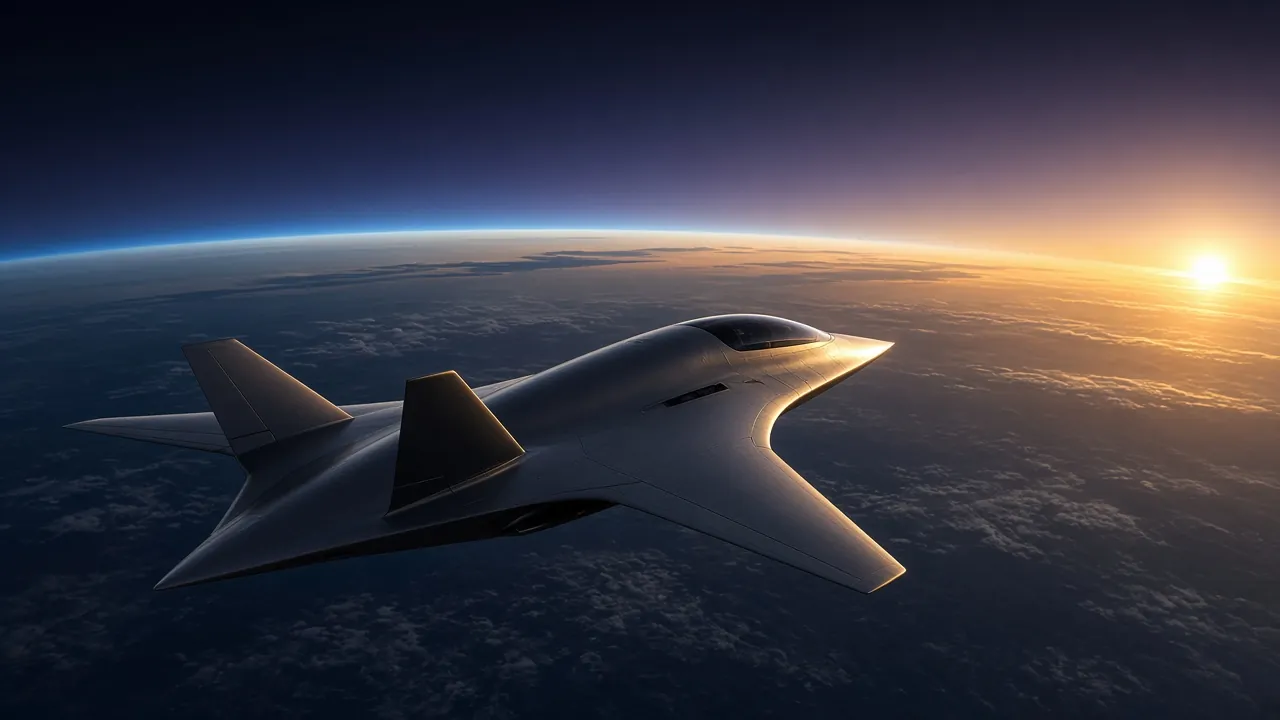
For centuries, the stars have beckoned. From ancient navigators charting courses by constellations to science fiction writers envisioning hyper-speed journeys to distant galaxies, humanity's fascination with the cosmos is deeply ingrained. Today, that fascination is transforming from a dream into a tangible, albeit highly exclusive, reality: commercial space tourism. While Virgin Galactic and Blue Origin grab headlines with their suborbital joyrides, and SpaceX hints at lunar circumnavigations, the true architects of this burgeoning industry often operate behind the scenes. And at the heart of much of this silent revolution lies a familiar name: NASA.
You might think of NASA as solely focused on scientific discovery, robotic probes, and groundbreaking missions to Mars. And you'd be right. But the agency's relentless pursuit of knowledge, its pioneering work in spacecraft design, life support systems, astronaut training, and deep space communication, forms the foundational bedrock upon which the entire edifice of commercial space tourism is being painstakingly constructed. Without NASA's decades of research, development, and, often, hard-won lessons from tragic failures, the idea of ordinary citizens vacationing in orbit would remain firmly in the realm of fantasy.
Disclosure: How we researched this: we compiled this guide from the public sources named in the text, and did not test the products ourselves. Our editorial policy explains how we choose and check sources.
The Gravitational Pull of Commercial Space: What's on Offer (and Coming Soon)
Let's paint a picture of what 'space tourism' means today, and what it promises to become. Currently, the most accessible form involves suborbital flights – a ballistic trajectory that takes you to the edge of space (above the Karman Line, roughly 62 miles or 100 kilometers above Earth) for a few exhilarating minutes of weightlessness and awe-inspiring views of our planet, before returning to Earth. Companies like Virgin Galactic and Blue Origin are the front-runners in this niche, offering experiences that are less a journey *to* space and more a fleeting, profound encounter *with* it.
Looking ahead, the next frontier is orbital tourism. This involves spending days, or even weeks, orbiting Earth aboard purpose-built space habitats. Think luxurious, zero-gravity hotels. Companies like Axiom Space (in partnership with NASA and the ISS) are leading this charge, aiming to offer stays on modules attached to the International Space Station, with plans for their own independent commercial space station. These experiences will be fundamentally different: sustained weightlessness, multiple sunrises and sunsets from above the atmosphere, and truly immersive views that change and evolve over time. Imagine dining with Earth as your backdrop, or gazing out a panoramic bay window at the shimmering auroras.
And then, the ultimate dream: lunar tourism. SpaceX has already announced plans for civilian circumlunar flights aboard its Starship vehicle, and future visions include lunar orbital hotels or even brief stays on the Moon's surface. While technically far more challenging and costly, the allure of seeing Earth as a distant blue marble from another celestial body is an experience that transcends current human understanding.
NASA's Invisible Hand: How Decades of Research Pave the Way
It's easy to credit the private companies with innovation, but it's crucial to understand NASA's role as the silent enabler. Here's a breakdown of how their foundational work is critical:
1. Spacecraft Design and Engineering: The Blueprint for Safe Passage
Every rocket, every capsule, every module carrying humans into space today owes a debt to NASA's pioneering efforts. From the Mercury, Gemini, and Apollo programs to the Space Shuttle and the International Space Station, NASA developed the blueprints for:
- Reliable Propulsion: The basic physics and engineering behind rocket engines, propellant handling, and launch systems were perfected over decades by NASA engineers.
- Structural Integrity: How to build vehicles that can withstand the immense forces of launch and re-entry, and the harsh vacuum of space.
- Thermal Protection Systems: The critical heat shields necessary for safe atmospheric re-entry – without which, any space vehicle would incinerate. NASA's early triumphs and heartbreaking failures (like Columbia) directly informed current re-entry shield designs.
- Guidance, Navigation, and Control (GNC): The sophisticated software and hardware that allows a spacecraft to orient itself, maintain a stable orbit, and execute precise maneuvers.
2. Life Support Systems: Keeping Humans Alive in a Hostile Environment
This is arguably NASA's most direct contribution to space tourism. The space environment is anathema to human life. To survive, a spacecraft must become a miniature, self-sustaining Earth. NASA has spent decades perfecting:
- Atmosphere Management: Maintaining breathable air (oxygen, nitrogen mix), removing carbon dioxide, and controlling humidity and temperature. This includes the CO2 scrubbers and oxygen generators refined on ISS.
- Water Reclamation and Waste Management: Turning wastewater (sweat, urine, cabin humidity) into potable water is an absolute necessity for long-duration missions. Commercial ventures will adapt these systems.
- Food Storage and Nutrition: While tourists might get gourmet meals, the fundamental challenges of providing nutritious, long-lasting food in space were tackled by NASA.
- Radiation Protection: Beyond Earth's protective magnetosphere, space is awash in dangerous radiation. NASA's research into shielding, dosimetry, and biological effects is vital for the health of future tourists.
3. Astronaut Training and Operations: The Human Factor
NASA's rigorous astronaut training programs have defined what it means to operate safely and effectively in space. While tourists won't undergo years of preparation, elements of NASA's training are being adapted:
- Emergency Procedures: Knowing how to respond to fires, depressurization, or medical emergencies is paramount. NASA's robust protocols are the gold standard.
- Weightlessness Adaptation: Techniques for managing motion sickness and navigating in microgravity are based on NASA's extensive experience.
- Human Factors Engineering: Designing spacecraft interiors, controls, and interfaces for optimal human use and efficiency – lessons learned over decades of continuous human presence in space.
4. Space Medicine and Physiology: Understanding the Body in Orbit
What happens to the human body in space? Muscle atrophy, bone density loss, vision changes, cardiac deconditioning, and altered sleep patterns are all well-documented. NASA's long-term research on the ISS provides the bulk of this crucial data:
- Countermeasures: Exercise regimens, nutritional supplements, and medical monitoring protocols developed by NASA are essential for maintaining tourist health during and after their trip.
- Medical Kits and Procedures: What kind of medical equipment and expertise is needed onboard a commercial space vehicle? NASA's flight surgeons and medical teams have written the book.
5. Space Communications and Navigation: Staying Connected and on Course
Guiding a vehicle through space and maintaining constant contact with Earth is no small feat. NASA's global network of tracking stations (like the Deep Space Network) and its expertise in satellite communication are direct predecessors to commercial systems. Precise orbital mechanics, collision avoidance strategies, and weather monitoring for launch are all areas where NASA's expertise is invaluable.
6. International Space Station (ISS): The Ultimate Testbed and Partner
The ISS isn't just a research laboratory; it's a living prototype for future orbital habitats. NASA, as a key partner in the ISS, has allowed commercial companies to send private astronauts to the station, proving the viability of private access. also, the very modules and systems that Axiom Space plans to operate on the ISS are a direct extension of NASA-developed hardware and operational procedures.
The Path Ahead: Challenges and the Promise
Despite NASA's foundational contributions, commercial space tourism faces significant hurdles. Cost remains the biggest barrier – millions for orbital travel, hundreds of thousands for suborbital. Safety is paramount, and the public's trust will hinge on an impeccable safety record. Regulatory frameworks are still evolving, and the sheer complexity of operating commercial vehicles in a shared orbital environment requires careful international cooperation.
However, the promise is extraordinary. As technology advances and economies of scale take hold, prices will inevitably fall. Imagine the scientific breakthroughs possible when more people, not just government-selected astronauts, can conduct experiments in microgravity. Imagine the profound shift in perspective – the 'overview effect' – experienced by millions, fostering a deeper appreciation for our fragile home planet.
The dream of venturing beyond our atmosphere is no longer the sole purview of national space agencies. But as you gaze at the launch footage of a private rocket carrying tourists to space, remember the quiet, relentless work of NASA: the engineers who designed the heat shield, the doctors who understood human physiology in microgravity, the scientists who perfected the life support systems. Their decades of tireless effort, perseverance, and groundbreaking discoveries are the unseen launchpad for humanity's commercial journey to the stars. The blue marble awaits, and thanks to NASA's enduring legacy, more and more of us will soon have the chance to see it from a truly breathtaking new perspective.
Sources and further reading
Official and primary sources covering the topics in this article:
- CAA: space regulation: background on UK licensing of spaceflight.
- NASA: background on official mission news.
- European Space Agency: background on European missions, including UK involvement.
Related Articles
- Nasa S Revolutionary Mars Sample Return Mission A Closer Look At The Future Of S
- Astro Gardening Growing Dinner On Mars And Beyond Future Space Cuisine
- Nasa Mars Tech Shaping Our Future
Chris is a freelance writer and editor covering a wide range of topics with a focus on accuracy and depth.
Last updated: 2026-04-25 · Fact-checked by editorial team
Content Attribution: All content on Space Exploration & NASA News Shorts is original. External sources are attributed where applicable. Trademarks belong to their respective owners.