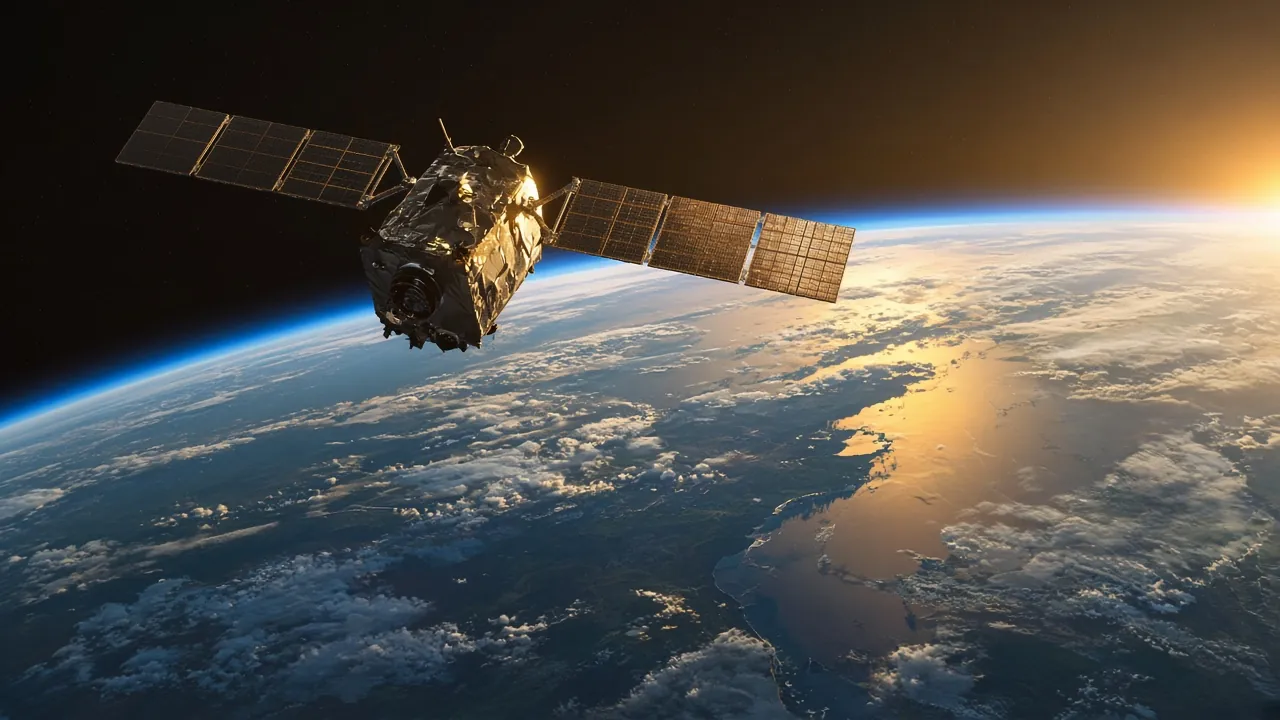
When you think of NASA, images of astronauts landing on the Moon, rovers exploring Mars, or the majestic Hubble Space Telescope probably spring to mind. These iconic missions capture our imagination and push the boundaries of human endeavor. But what if I told you that another, less celebrated, arm of NASA is working tirelessly, 24/7, just above your head, silently influencing countless aspects of your daily life?
It’s easy to dismiss these satellites as mere scientific instruments, gathering data for esoteric research papers. But the reality is far more impactful. From the food on your plate to the clothes you wear, from the air you breathe to the strength of your internet connection, these orbiting sentinels are playing a pivotal, often invisible, role. Let’s start a journey to uncover the hidden influence of NASA's Earth-observing fleet and discover how these distant eyes are reshaping our world, one data point at a time.
Disclosure: How we researched this: we compiled this guide from the public sources named in the text, and did not test the products ourselves. Our editorial policy explains how we choose and check sources.
The Silent Guardians: What Exactly Are Earth-Observing Satellites?
When we talk about Earth-observing satellites, we’re referring to a diverse array of spacecraft designed to collect information about our planet’s land, atmosphere, ocean, and ice. Unlike their deep-space counterparts that gaze at distant galaxies, these satellites orbit Earth, typically at altitudes ranging from a few hundred to tens of thousands of miles. They carry sophisticated instruments – radars, radiometers, spectrometers, and more – each designed to measure specific aspects of Earth's systems.
Think of them as ultra-advanced, constantly vigilant sensors. Some stare at the swirling patterns of hurricanes, others meticulously track tiny changes in sea level, while still others map deforestation or monitor air pollution. The data they gather is immense, complex, and crucially, accessible to scientists, governments, and even private companies worldwide. It’s this data, once processed and analysed, that translates into actionable insights affecting everything from policy decisions to everyday consumer goods.
Forecasting Your Future: Weather and Climate
This is perhaps the most obvious, yet still profoundly impactful, area where NASA’s Earth observation data touches your life. Every time you check the weather forecast on your phone or television, you’re directly benefiting from satellite technology. While national weather agencies like NOAA operate many meteorological satellites, NASA develops and launches many of the foundational missions, often in partnership, providing the modern instruments and research that improve forecasting models.
- Predicting the Storm: Satellites track the formation and movement of hurricanes, typhoons, and other severe weather events with incredible precision. This allows for timely warnings and evacuations, saving countless lives and billions of dollars in potential damage. Imagine a world without accurate storm tracking – navigating hurricane season would be a terrifying gamble.
- Daily Forecasts: Beyond extreme weather, satellite data on cloud cover, atmospheric temperature, and moisture levels are crucial inputs for the numerical weather prediction models that produce your daily five-day forecast. Without this constant stream of global observations, local forecasts would be far less reliable.
- Climate Change Monitoring: On a broader scale, NASA satellites are the global watchdogs for climate change. They measure rising sea levels with millimeter accuracy (missions like JASON and Sentinel-6 Michael Freilich), track melting glaciers and ice sheets (GRACE-FO), monitor changes in global temperatures, and quantify atmospheric greenhouse gases (OCO-2). This data isn't just for scientists; it informs international climate negotiations, helps cities plan for future risks, and contributes to our collective understanding of Earth's delicate balance.
Nourishing the Planet: Agriculture and Food Security
From the wheat in your bread to the coffee in your mug, agricultural practices are increasingly optimised and monitored using satellite data. This might sound futuristic, but it's happening right now.
- Precision Agriculture: Farmers are using satellite imagery to assess crop health, identify areas needing more water or fertilizer, and even predict yields. By analysing variations in plant colour and infrared reflections, satellites can detect stress long before it’s visible to the human eye. This leads to more efficient resource use, reduced waste, and ultimately, more affordable food for you.
- Drought Monitoring: Satellites like those in the Landsat program provide crucial data for monitoring drought conditions. By observing soil moisture levels and vegetation stress over vast areas, governments and aid organisations can anticipate food shortages and direct resources to vulnerable regions, helping to prevent humanitarian crises.
- Forest Management: Sustainable forestry and preventing deforestation are vital for our planet's health. NASA satellites help track forest cover changes, identify illegal logging, and monitor the health of forests globally, impacting everything from timber prices to the air quality in your community.
The Air We Breathe, The Water We Drink
Environmental monitoring is another cornerstone of NASA’s Earth observation efforts, directly impacting public health and resource management.
- Air Quality Alerts: Satellites measure pollutants like carbon monoxide, nitrogen dioxide, and aerosols in the atmosphere. This data helps local authorities issue air quality alerts, allowing individuals with respiratory conditions to take precautions and informing policies aimed at reducing pollution. Ever noticed how air quality reports are more prevalent now? Satellite data is a big reason why.
- Water Resource Management: With growing populations and changing climates, managing freshwater resources is paramount. Satellites can map snowpack in mountains (critical for river flow), monitor reservoir levels, and even track the movement of groundwater. This information is vital for sustainable water allocation for agriculture, industry, and drinking water for millions.
- Ocean Health: Our oceans are vital for climate regulation and food. Satellites monitor ocean temperature, salinity, currents, and even the health of phytoplankton (the base of the marine food web). This helps us track harmful algal blooms, understand fisheries, and protect marine ecosystems, ensuring the seafood you enjoy is sustainably managed.
Navigating Your World: Safety and Connectivity
While GPS is often associated with the Department of Defence, NASA's research and development of satellite technologies have profound implications for navigation, disaster response, and even global communication.
- Disaster Response and Recovery: When earthquakes strike, wildfires rage, or floods devastate regions, satellite imagery becomes an invaluable tool for first responders. It helps assess damage, locate stranded populations, and plan evacuation routes in real-time, often in areas where ground infrastructure has been destroyed. This rapid assessment saves lives and speeds up recovery efforts.
- Mapping and Surveying: Accurate maps are essential for everything from urban planning to hiking. NASA’s Shuttle Radar Topography Mission (SRTM), for example, created the most complete high-resolution digital topographic dataset of Earth, used globally for everything from infrastructure development to simulated flight paths.
- Internet and Communication: While not directly providing your home internet, NASA’s foundational research in satellite communication and remote sensing has paved the way for the vast network of communication satellites powering everything from global cellular networks to satellite television and remote internet access. The infrastructure for observing Earth from space has parallel benefits for connecting us.
The Future is Now: Emerging Applications
The impact of Earth-observing satellites isn't static; it's constantly evolving. New missions and analytical techniques are unlocking even more ways to benefit humanity:
- Urban Heat Islands: Satellites are helping city planners identify and mitigate urban heat islands – areas significantly warmer than surrounding rural areas due to human activity. This data informs designs for green spaces, reflective surfaces, and other strategies to improve comfort and reduce energy consumption.
- Disease Outbreak Prediction: By monitoring environmental factors like temperature, humidity, and vegetation, scientists can use satellite data to predict conditions favorable for mosquito-borne illnesses like malaria and dengue fever, allowing for proactive public health interventions.
- Energy Infrastructure Monitoring: Satellites can help monitor pipelines for leaks, assess the health of solar farms, and track changes in energy-related land use, contributing to more efficient and sustainable energy systems.
Beyond the Lab: How You Can Engage
The beauty of NASA's Earth observation program is its commitment to open data. Much of the information collected by these satellites is publicly available, fueling innovation and empowering citizens:
- NASA Worldview: Explore stunning, near real-time satellite imagery of Earth at worldview.earthdata.nasa.gov. Watch wildfires spread, track hurricanes, or simply marvel at our planet from space.
- Eyes on the Earth: Dive into an interactive 3D visualization of NASA's Earth-observing missions and the data they collect at eyes.nasa.gov/apps/earth/.
- Citizen Science Projects: Get involved! Projects like GLOBE Observer allow you to contribute ground observations that help validate satellite data, from cloud cover to mosquito habitats.
A World Seen, A Life Enriched
The next time you check the weather, buy fresh produce, or simply breathe the air, take a moment to appreciate the silent vigilance of NASA’s Earth-observing satellites. These technological marvels are more than just scientific instruments; they are an indispensable part of our modern world, providing the data that helps us understand, protect, and thrive on our remarkable home planet. Their influence is woven into the very fabric of our daily lives, a proof of humanity's endless curiosity and ingenuity, gazing down from above, tirelessly working for us all.
Related Articles
Chris is a freelance writer and editor covering a wide range of topics with a focus on accuracy and depth.
Last updated: 2026-04-25 · Fact-checked by editorial team
Content Attribution: All content on Space Exploration & NASA News Shorts is original. External sources are attributed where applicable. Trademarks belong to their respective owners.